
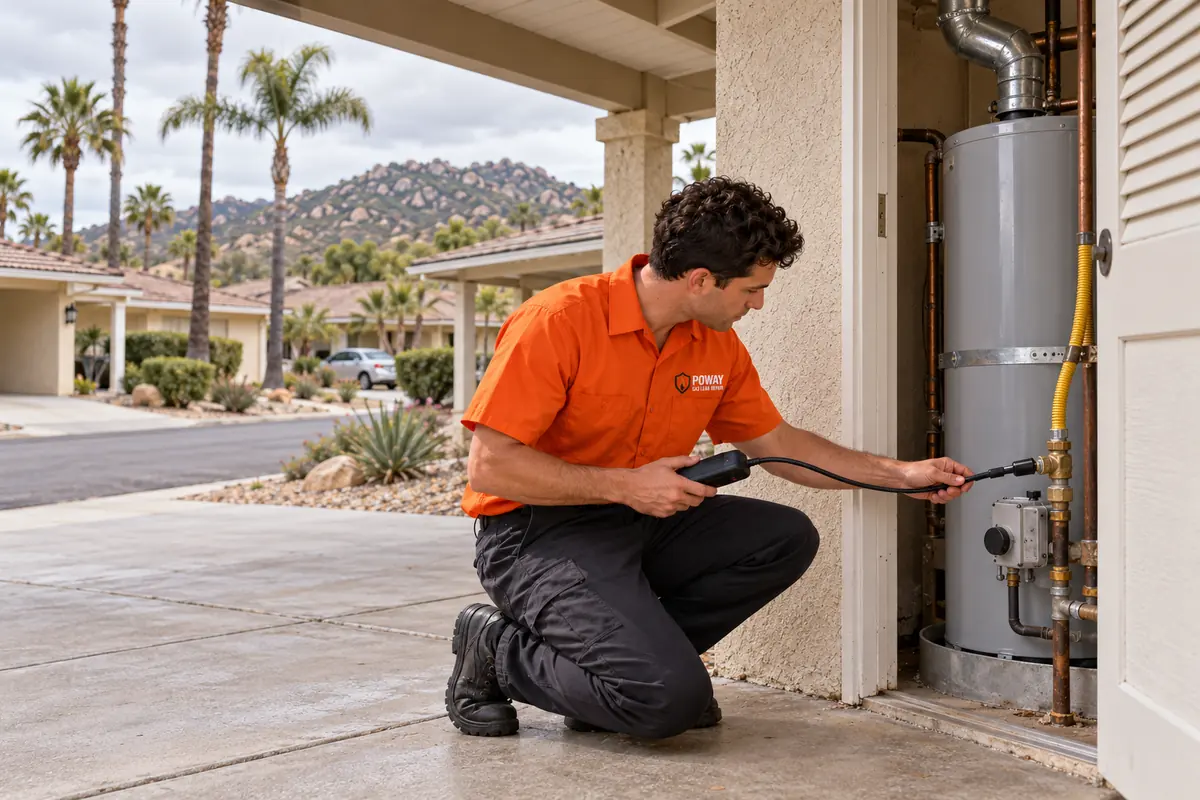
A rotten egg smell can point to leaking household gas, a problem in a drain, or sulfur in water. Treat an unexplained smell in the air as a possible fuel leak. Get everyone outside right away, avoid switches, phones, and flames indoors, and call SDG&E or 911 from a safe spot before calling for repair.
Once responders have ruled out fuel gas and cleared the house for reentry, you can pay attention to where and when the smell occurs. The same description of the odor can lead to very different repairs.
When should you treat a sulfur smell as a gas leak?
If you smell sulfur in room air and the source is unclear, leave. The same rule applies near a stove, furnace, water heater, meter, or outdoor grill. Garden and garage odors sometimes drift into the house, so the room where you first noticed it may be some distance from its source.
While you are leaving, skip appliance controls, garage door openers, and other electrical devices. Once you are outdoors and away from the smell, tell the utility or 911 where you first noticed it, whether you heard any hissing, and whether anyone feels sick. Stay outside until responders tell you what to do.
The trade-off is stepping out for an odor that may turn out to be a drain problem versus spending time indoors if gas is escaping. The same low threshold applies to a smell that comes and goes. Use these other signs of a gas leak when describing what you already noticed to responders.
What can the location of the odor tell you after clearance?
Once a gas leak has been ruled out, use this decision rule: note whether the odor is in the room air, only above a particular drain, or in the water away from the sink. A smell that occurs only when one rarely used fixture drains calls for a different check from an odor in hot water at several faucets.
A useful exception is a gas water heater. A smell that develops near the heater when it fires could be related to the appliance or its connection. If gas is suspected again, leave and repeat the emergency call from outside. A smell confined to water drawn from the faucet is a separate observation to share with a plumber after clearance.
If the utility identifies a problem on the homeowner's side of the meter, call (858) 363-8245 for gas leak repair. Tell us what the crew isolated so the technician knows where to start.
What can you safely check at a sink or floor drain?
With the home cleared, note whether the smell stands out at a guest bath sink, laundry drain, or other fixture that rarely sees water. A drain trap holds a small amount of water to keep air from the sewer line from entering the room. If a trap has dried out, ordinary use of the fixture can refill it.
If an odor seems to come from the water itself, collect a glass and step away from the sink. Note whether you notice the odor away from the drain and whether it occurs with hot water, cold water, or both. A smell in hot water at several taps is a useful clue for the plumber evaluating the water heater.
Skip drain chemicals as a diagnostic step. If a drain gurgles, backs up, or smells again soon after ordinary use, share that with a plumber. Whether several drains are affected helps narrow the search.
What will a plumber check when the smell comes back?
On the drain side, a plumber can check whether the trap holds water and look for a venting or drainage problem. On the water side, comparing hot and cold fixtures helps decide whether to focus on the heater or investigate the supply. Tell the plumber if a fixture was recently installed or the smell started after a period of little use.
On the fuel side, a licensed gas technician checks the pipe, valve, and appliance connection where a leak is suspected. A technician with equipment for gas leak detection can confirm what needs repair. If the gas has been shut off, leave restoration to the utility or qualified professional.
Call (858) 363-8245 if a utility visit points to your gas piping or an appliance gas connection. Share any instructions the crew gave you about keeping the equipment out of service.
What should you write down before scheduling service?
After the house is safe, make a short note of the room, the time, and what was in use when the odor started. Include places you had already noticed the smell, such as the hallway outside the bath. Keep any utility visit notes handy, including whether gas service or a particular appliance was shut off.
For a water odor, list which faucets were affected and whether the smell followed the hot or cold water. For a drain odor, mention slow drainage or recent changes to plumbing. These details help the plumber choose where to start without asking you to recreate the problem.
What else can cause a sulfur odor at home?
Can a sewer smell come from around the base of a toilet?
Yes. A failing seal can let sewer odors escape. Once a fuel gas leak has been ruled out, tell a plumber if the smell is strongest at the base or the toilet shifts during normal use.
Does a sulfur smell in cold water at every faucet mean I should call the water provider?
Yes. After fuel gas has been ruled out, an odor in cold water at several fixtures is worth reporting to your water provider. If you use a private well, ask a water professional about testing.
Can a garbage disposal smell bad even when it drains normally?
Yes. Food residue can collect around the opening or splash guard. If the home has been cleared of a gas hazard, follow the manufacturer's cleaning instructions and keep your hands out of the disposal.
What if the same smell is coming from another unit?
Leave and call SDG&E or 911 from a safe location if fuel gas is possible. Once the emergency is reported, tell building management which units or common areas may be affected.
For a suspected gas leak, make the emergency call from outside first. When you need help with the home gas line in Poway, call (858) 363-8245. We answer 24/7.