
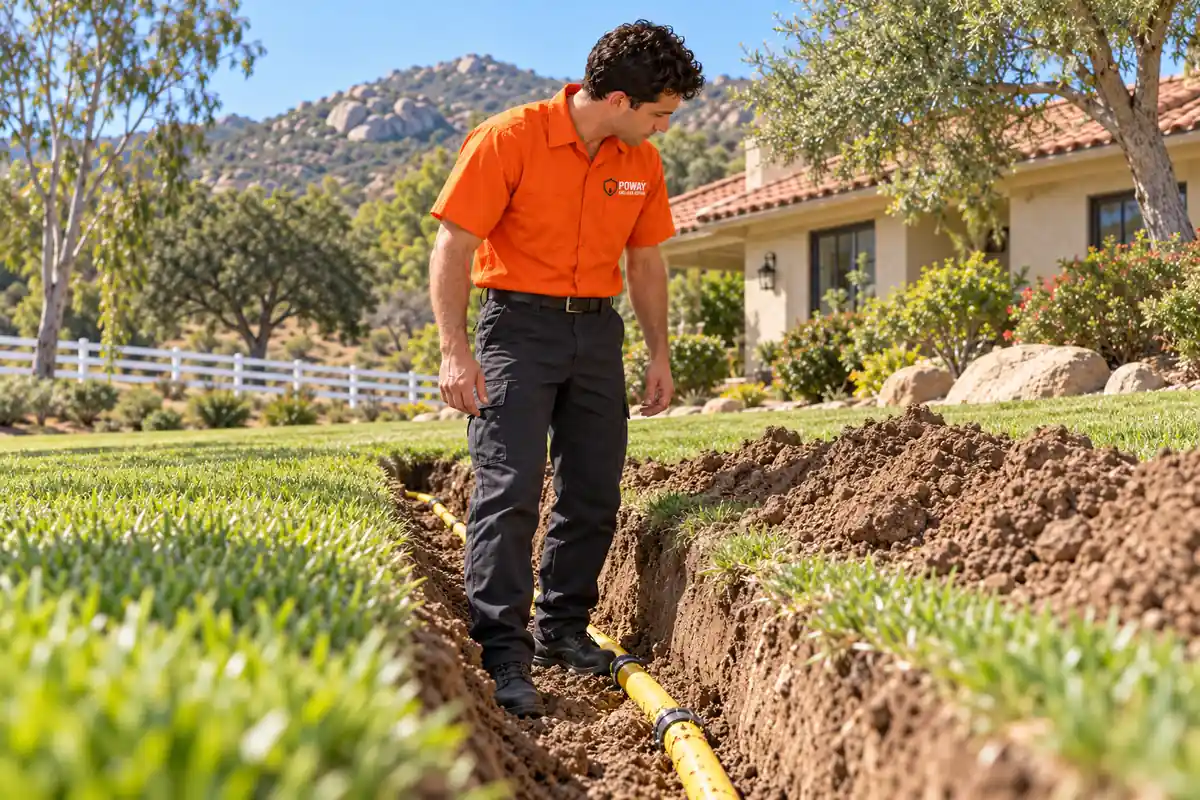
There is no single depth for buried gas lines. Federal pipeline safety rules (49 CFR 192.361) require a utility gas service line to have at least 12 inches of cover on private property and at least 18 inches under streets and roads. Many lines are buried deeper than that minimum, and a line can end up shallower than it started after grading, erosion or a past project. Call 811 before you dig and never use a depth number as permission to dig.
The minimum above is for utility service lines, the pipe that runs from the main in the street to your meter. The piping past the meter, such as a line to a pool heater, barbecue or outdoor kitchen, is installed to the plumbing code that the City of Poway Building Department enforces, and its depth can differ. If you are planning any digging, the safe move is to have the line located first, not to estimate.
How deep are gas lines buried, and what decides the depth?
Depth is set by where the line runs and what is above it. A line under a lawn or planting bed faces less load than one under a driveway, sidewalk or street, which is why the rule asks for more cover under streets and roads. Where a line crosses a driveway or other heavy load, a designer may call for more cover or added protection. A line that is buried deeper is harder to reach with a shovel, but it can also be harder to reach for a repair, so deeper is not automatically better in every spot.
Depth also changes over time. Landscaping, grading, erosion and heavy rain can leave a line with less soil over it than the day it went in. That is why the original plan is not a reliable guide.
Why you should not use a minimum depth as a digging guide
Treat the minimum as the least a line was allowed to be, not as a sign of where it is. Three reasons:
- You do not know which rule your pipe was built to. A utility service line, a line past the meter and an old line added by a previous owner can all be different.
- Depth is not constant along a run. A line can rise near a meter, a slab edge or a crossing, so the part you hit may be shallower than the rest.
- A shallow strike is not a small strike. A shovel, a post-hole digger or a trencher can damage a pipe with little warning, and a damaged line may leak underground with little smell at the surface at first.
The exception is a project with no digging at all, such as surface cleanup or planting in a pot. Anything that breaks the soil, from a fence post to a sprinkler trench, falls under the call-before-you-dig rule.
Who locates the line, and what does 811 not mark?
Call 811 at least two working days before you dig. The 811 service sends the utilities that own buried lines to mark them with paint or flags, so you know where not to dig. Dig by hand near the marks and follow the instructions that come with your request.
What 811 does not cover is the piping you own. Lines past the meter, such as one added for a grill, fire pit or pool heater, are usually not marked by the utility. For those, a licensed plumber can trace the pipe with a locator before you dig. Our gas line installation and gas line repair pages explain what we do on a line past the meter, and a gas leak detection visit can check a suspect line.
What should you do if you hit a gas line?
Treat any damage to a gas line as an emergency, even if you do not smell gas at first.
- Stop work and shut off any engine or powered tool, then leave the area. Do not start anything up again.
- Get people and pets away from the dig and away from the house if gas may be reaching it.
- Call 911 or SDG&E from a safe distance. Do not use a phone, switch or doorbell inside the house.
- Do not try to bend, squeeze or cover the pipe. Leave it as it is.
- Call us for the repair once the utility or the fire department says the area is safe.
Signs of an underground leak include a rotten egg smell, a hissing or blowing sound, bubbling in wet soil or standing water, and dead or dying plants over the line. The smell guide how do you know if you have a gas leak goes through the full list.
Who fixes a buried gas line, and when do you call a plumber?
The utility is responsible for the gas system up to and including the meter. Past the meter the pipe is yours, and a licensed plumber repairs or replaces it. Call a plumber when the line to a grill, heater or other outdoor appliance may be damaged or corroded, when you need a line located before a project, or when a technician finds that a line is too shallow for what is above it. A gas leak plumber checks the line, finds the problem and explains the repair and its price before any work starts. If a line cannot be fixed economically, gas line replacement is the alternative.
Call (858) 363-8245 to have a line checked. A technician answers 24/7.
Frequently asked questions about buried gas lines
Is a gas line under a driveway buried deeper?
Often, yes. The federal rule for utility service lines asks for 18 inches of cover under streets and roads, compared with 12 inches on private property. Lines under driveways are often given extra cover as well, but that varies, so have the line located before any work.
Does 811 mark the gas line to my grill or pool heater?
Usually not. The utility marks its own lines up to the meter. Piping you own past the meter is usually not marked, so a licensed plumber can trace it with a locator before you dig.
Can I dig by hand near a gas line?
Only after the line has been marked through 811, and only by hand near the marks, following the instructions on your request. Do not dig near an unmarked line, and stop and call if you find pipe or anything that looks like it.
What should I do if I smell gas while digging?
Stop work, shut off any engine, and leave the area. Call 911 or SDG&E from a safe distance, then call us for the repair once it is safe.