
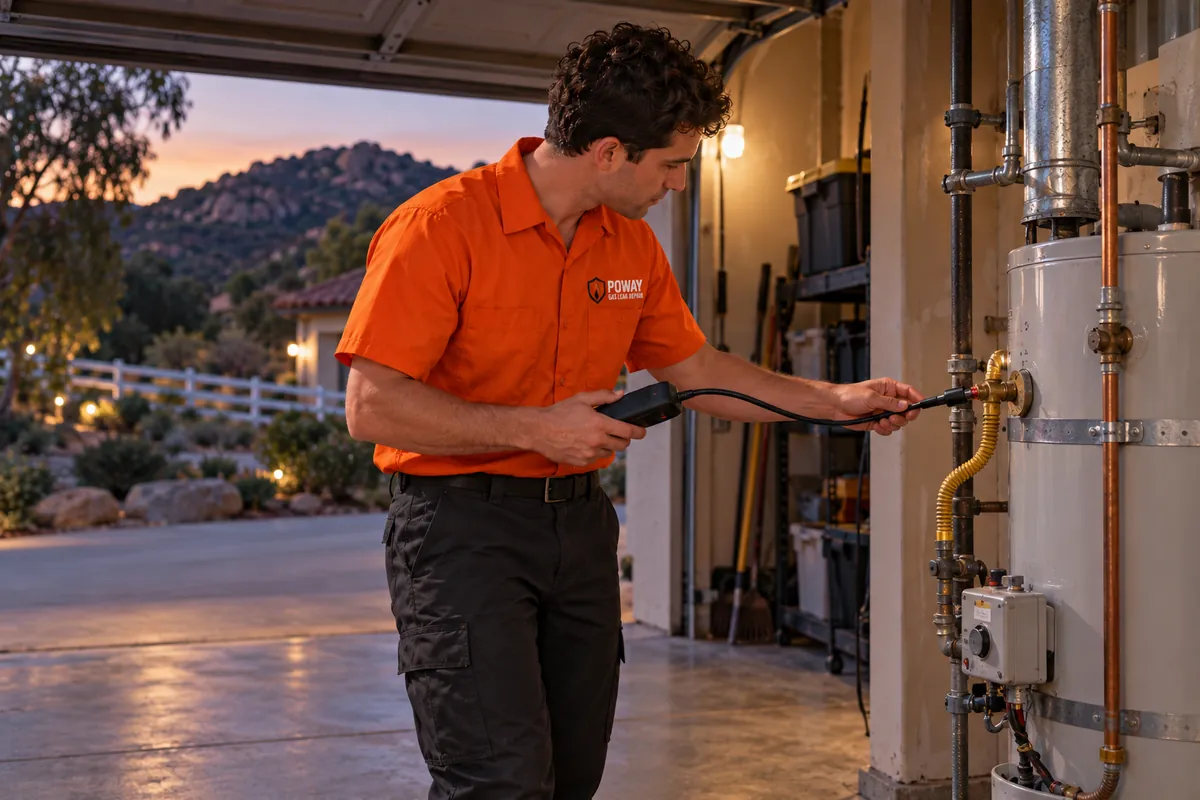
If you suspect a gas leak or someone becomes unwell in a possible gas-related incident, leave the affected area and call 911 from a safe location. Do not wait to match symptoms to an online list.
Feeling unwell near gas equipment can have different causes. Symptoms alone cannot tell you whether there is a natural gas leak, carbon monoxide exposure or another problem. Emergency responders and medical professionals need to assess the situation; a plumbing appointment cannot replace that assessment.
This guide explains what to communicate and why two different gas hazards should not be confused. It does not diagnose an exposure or tell you when a home is safe to re-enter.
Natural gas and carbon monoxide are different hazards
Natural gas delivered to homes contains an added odorant to help people notice a leak. Carbon monoxide, or CO, is odorless and can be produced by fuel-burning equipment. A rotten-egg smell is not the smell of CO, and no smell does not rule out CO.
Do not assume that a device described generally as a gas alarm detects both hazards. Before an emergency, check the device label and manufacturer’s instructions to understand what it detects. During an alarm or suspected incident, act on the warning rather than testing the device or searching online inside the building.
Symptoms need medical assessment
CDC lists headache, dizziness, weakness, upset stomach, vomiting, chest pain and confusion among common CO-poisoning symptoms. These symptoms also have other possible causes. They are reasons to seek help in the context of a suspected exposure, not a way to diagnose CO at home.
Tell emergency services if anyone is unwell, particularly if a person is confused, has difficulty breathing, has chest pain or has lost consciousness. Do not re-enter a hazardous area to attempt a rescue; tell responders where the person is and follow their directions.
Do not wait for everyone to feel ill
Different people may notice a problem at different times. Someone feeling well does not establish that an area is safe. Similarly, feeling better after going outside does not prove that an exposure was harmless or that the equipment can be used again.
Tell the responding medical professional about the suspected gas or combustion-related incident, when symptoms began and whether others were affected. Let them decide what evaluation is needed. Do not use the length of exposure or an online symptom chart to dismiss the concern.
Give responders a clear account
From a safe location, provide the address and explain whether there was an odor, an alarm or an equipment problem. Describe symptoms and approximate timing without trying to identify the gas yourself. Mention anyone who may still be inside.
Share only information already available. Do not return for the alarm model, appliance label or a photograph. After the immediate response, keep the instructions and any report so the repair professional understands what was found and what must remain out of use.
Separate medical care from equipment repair
A repair provider can discuss equipment or piping work after the emergency assessment. Medical evaluation is a separate need. Completing a repair does not answer whether a person needs care, and a person feeling better does not certify the building as safe.
For the service sequence, read SDG&E or a plumber: who to call. For odor recognition without self-testing, see what a gas leak can smell like.
Frequently asked questions
Does a headache prove I have a natural gas leak?
No. A headache has many possible causes. In a suspected gas-related incident, leave and seek appropriate emergency assessment rather than diagnosing the cause yourself.
Can carbon monoxide smell like rotten eggs?
CO itself has no odor. A sulfur-like smell may be a separate warning, but smell cannot rule CO in or out.
Can I go back inside once I feel better?
Feeling better does not show that the building is safe. Follow emergency responders’ instructions about re-entry and medical care.