
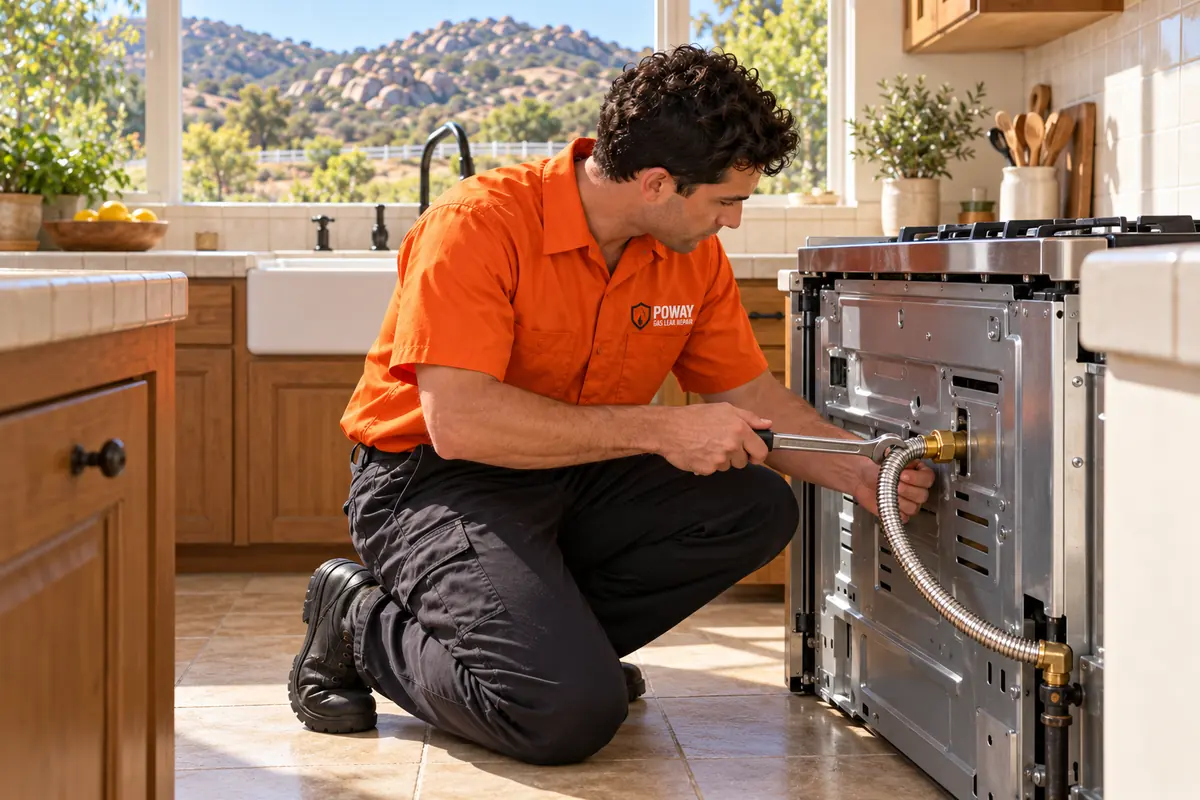
Natural gas rises indoors because it is lighter than air, with a specific gravity of about 0.6 compared to air's 1.0. This means natural gas will accumulate near the ceiling or upper areas of rooms unless actively dispersed. Understanding this behavior is critical for gas safety in Poway homes.
This post explains natural gas behavior indoors, the properties that affect its movement, and practical gas leak detection and safety tips to help you protect your home and family.
Does natural gas rise or fall?
Natural gas rises because it is less dense than the surrounding air. Its primary component, methane, has a molecular weight of 16, while air averages about 29. This difference causes natural gas to move upward when released indoors.
In Poway homes, this rising tendency means gas leaks often collect near ceilings, attic spaces, or high points in walls. However, natural gas can mix with air and disperse depending on ventilation, temperature, and airflow conditions.
Natural gas properties and safety in Poway homes
Natural gas rises, but several factors influence its indoor behavior. Methane's low density and flammability range (5% to 15% concentration in air) make it a serious hazard if not detected promptly.
Natural gas is colorless and odorless in its pure form, but utility companies add mercaptan, a sulfur-based odorant, to help residents identify leaks by smell.
Knowing these basics helps you respond quickly and lowers the risk of explosions or poisoning. If you smell gas, get outside without using switches or phones, call 911 or SDG&E from outside, then call for gas leak repair in Poway right away.
How natural gas moves in air indoors
Natural gas movement indoors depends on:
- Density difference: Methane rises because its density is only about 60% of air's.
- Ventilation: Airflow from open windows spreads gas out over time, while a closed-up house lets it build up.
- Temperature gradients: Warm air rises, carrying gas upward; cooler areas may trap gas pockets.
- Obstructions: Walls, furniture, and ducts can influence gas flow paths.
Many older Poway houses have attics or crawl spaces where natural gas can accumulate unnoticed. This makes regular inspections and professional gas leak detection essential for safety.
Where does natural gas accumulate in a home?
Natural gas accumulates near the ceiling, attic spaces, or any upper cavity where it has room to collect. Since it rises, gas is less likely to pool near floors unless trapped by airflow patterns.
Common accumulation points include:
- Ceiling corners and junctions
- Attics and roof spaces
- Upper wall cavities
- Above dropped ceilings or soffits
Poway's varied home styles, from ranch to multi-story houses, influence where gas might collect. For example, multi-level homes with open stairwells can allow gas to travel upward rapidly.
Identifying these areas helps a local gas leak plumber focus inspections and place detectors correctly.
Why knowing gas behavior matters for safety
Understanding natural gas behavior indoors is vital because it dictates how you detect leaks and respond safely. If you know natural gas rises, placing gas detectors near the ceiling improves early warning chances.
Incorrect assumptions about gas behavior can delay detection and increase risk. For instance, placing alarms near the floor or ignoring upper-level leak signs can allow dangerous concentrations to build unnoticed.
In Poway, where many homes have gas appliances, knowing these safety basics reduces the likelihood of accidents and informs emergency actions.
Gas leak safety tips for Poway residents
Here are practical steps to stay safe with natural gas leaks in Poway homes:
- Install gas detectors near ceilings in kitchens, laundry rooms, and furnace areas.
- Maintain proper ventilation, especially in attics and upper floors.
- Never ignore the smell of mercaptan; it indicates a possible leak.
- If you smell gas, leave the building right away without using switches, appliances or phones. From outside, shut off the gas at the meter only if you can reach it safely, call 911 or SDG&E, then call a gas leak repair professional.
Regular professional inspections, along with timely gas line repair, help prevent leaks from aging pipes or faulty connections common in Poway's older neighborhoods.
Common mistakes in handling natural gas leaks
Homeowners often make these errors that increase danger during gas leaks:
- Assuming gas sinks and only checking near the floor. Natural gas rises. Propane is the exception: it is heavier than air and collects near the floor.
- Delaying evacuation to search for the leak source.
- Using phones or light switches inside the home before leaving.
- Ignoring faint gas odors in the hope that they will dissipate.
- Attempting DIY repairs on gas lines or appliances.
These mistakes can lead to explosions, fire, or health hazards.
When to call a professional for gas leak repair
If you smell gas or suspect a leak, get outside without using switches or phones, call 911 or SDG&E from outside, then call Poway Gas Leak Repair 24/7. Our technicians provide accurate gas leak testing and safe repairs.
Signs that require professional help include persistent gas odors, hissing sounds near gas lines, or pilot lights that won't stay lit. Timely intervention prevents costly damage and ensures compliance with local safety codes.
Licensed technicians also perform gas line installation and replacement services safely, which is critical for older homes built when materials and standards differed.
Frequently Asked Questions
Does natural gas rise or fall?
Natural gas rises indoors because it is lighter than air, with a density about 60% that of air. It tends to accumulate near ceilings or upper areas of rooms.
Why is it important to know how natural gas behaves?
Knowing how natural gas behaves helps you place detectors correctly and respond safely to leaks, reducing the risk of explosion and poisoning in Poway homes.
How can I stay safe during a natural gas leak?
Get everyone outside first. Do not use switches, appliances or phones inside, and do not stop to open windows. Once you are outside, call 911 or SDG&E, then a gas leak plumber for the repair.
Where does natural gas accumulate in a home?
Natural gas accumulates near ceilings, attics, and upper wall cavities where it rises and collects if not dispersed by ventilation.
Should I evacuate immediately if I smell natural gas?
Yes, immediate evacuation is critical. Do not use phones or switches indoors; leave the premises and call for professional help from outside.
Does gas from a stove rise or fall?
Gas from a natural gas stove rises toward the ceiling. If the stove runs on propane, leaking gas sinks and collects near the floor. Either way, if you smell gas, get everyone outside first and call 911 or SDG&E from outside.