
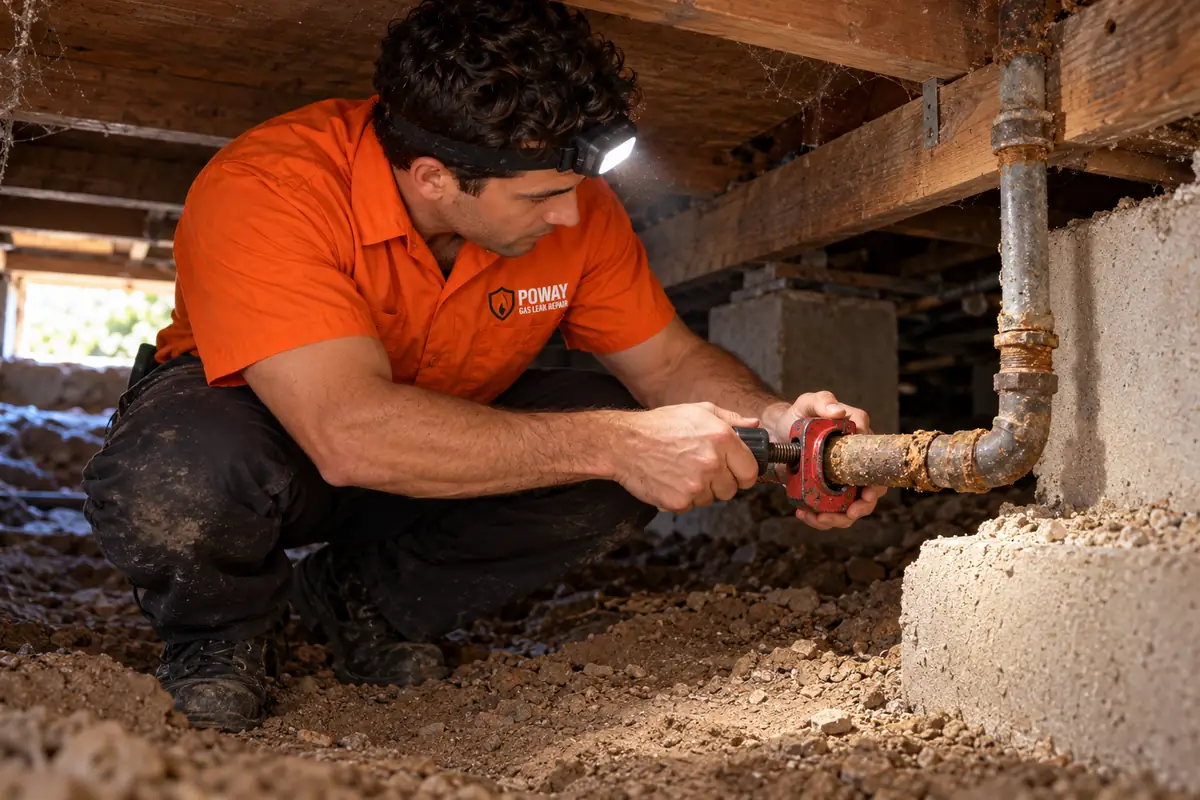
An older home may be more prone to gas leaks if it still has worn piping, damaged connections, or neglected gas lines underground. The best reason to arrange an inspection is an unknown repair history combined with a visible problem or upcoming work near the line. A gas smell changes the plan: get outside immediately and report it from a safe spot.
In a Poway home that has changed owners or been remodeled, a newer stove or furnace tells you about that appliance. The line feeding it could run through parts of the house that were untouched during the remodel. Gather any records you already have so a technician can see what was replaced and what is still in use.
What matters more than the year your house was built?
Look at the condition, location, and service history of the gas piping. A pipe exposed to moisture may corrode. A connector can be stressed when an appliance moves for cleaning, flooring, or replacement. Piping underground can deteriorate where you cannot see it, including on runs to a patio grill or pool heater.
An older house with documented piping replacement is an important exception. If the work included the branches that still serve your appliances, the age of the house alone tells you little about the gas system. Conversely, recent remodeling can hide piping or leave an unused branch whose condition needs checking.
Use this decision rule: book a licensed inspection if you notice corrosion, an unsupported pipe, an appliance that was moved, or a private buried line you cannot account for. If you notice gas odor or a hissing sound by a line, switch to the emergency steps below.
What can you check without touching the gas system?
During normal use, look at piping that is already visible from a floor or walkway. Write down where you see flaking, pitting, a bend, or a pipe that looks as if it has shifted. Keep your hands off connections and valves. Leave appliances where they are, and leave covered piping under floors or behind cabinets to the technician.
Ask for old permits, contractor paperwork, or notes from previous owners. Check whether they identify the specific branch and appliance served. Think about additions that used gas in the past, including a removed backyard heater. Tell the technician if the property has plumbing through a detached structure or beneath a patio.
For a planned inspection, ask a licensed technician to review visible piping and advise on inaccessible sections. If you have kitchen, laundry, or patio work coming up, mention it when you call (858) 363-8245
When is an old gas line an emergency?
Leave the home immediately if you smell gas, hear unusual hissing near a gas appliance or pipe, or have reason to think a line is leaking. Skip switches, phones, and flames on the way out. Call SDG&E or 911 from a safe distance outside. Keep away from the area until responders say it is safe to return, then call us for repair if the problem is on your side of the meter.
Report outdoor signs from a distance too. A patch of dying plants is worth mentioning if it lines up with gas piping and there is hissing, blowing dirt, or another sign of a leak. Leave the digging and testing to the people equipped to do it.
If the utility shuts off service, leave it off and ask which part of the system needs attention. A licensed technician can check customer-owned piping and appliance connections. Utility equipment, including the meter, belongs with the utility.
When does a repair make sense, and when should you replace a line?
A licensed technician can look beyond the first visible problem and assess whether nearby piping is sound. One damaged connection on an accessible branch may be a candidate for a targeted gas line repair. Widespread corrosion or repeated leaks along the same run can make replacement of that gas line the better option.
The trade-off is disruption now versus the likelihood of opening finished areas again. A repair may preserve cabinets or concrete if the surrounding line passes inspection. Replacing a deteriorated run can involve more access work, but it addresses the condition of that whole branch. Ask the technician to explain what can stay and why, and to explain the price before any work starts.
If you have a utility notice, keep it handy and tell us which appliances are out of service when you call (858) 363-8245
What should you do before a remodel or yard project?
Have the gas lines located before anyone opens a wall, drills for cabinetry, or starts digging. A public utility marking can leave out private gas piping after the meter. Tell the installer about the path to any outdoor appliance and ask who will locate that part of the system.
If you want to keep an appliance in service while changing a different branch, discuss that before work begins. A licensed gas line plumber can explain which parts must be isolated and tested. Save the final record with your house paperwork so the next person can follow the route.
What else should you know about older gas piping?
Does paint on exposed piping mean it was recently replaced?
Paint can be applied to piping that has been in place for years. Paperwork identifying the run and a technician's assessment are better ways to establish what was changed.
Should I tell a home inspector about a gas fireplace that was removed?
Yes. Note where it was and whether you have a record of the branch being disconnected. A licensed gas technician can check how the former supply was left.
Can my utility bill pinpoint a small gas leak?
No. Usage changes for many reasons, including weather and appliance use. A bill does not locate or clear a leak. Report an active warning sign from outside and have the piping tested when appropriate.
What if the meter serves more than one home?
Ask the property manager or association who is responsible for the shared piping. For a suspected leak, leave and report it from outside before contacting management.
For an inspection of older piping or a repair after an emergency, call Poway Gas Leak Repair. We answer 24/7 at (858) 363-8245